
 (703) 491-8300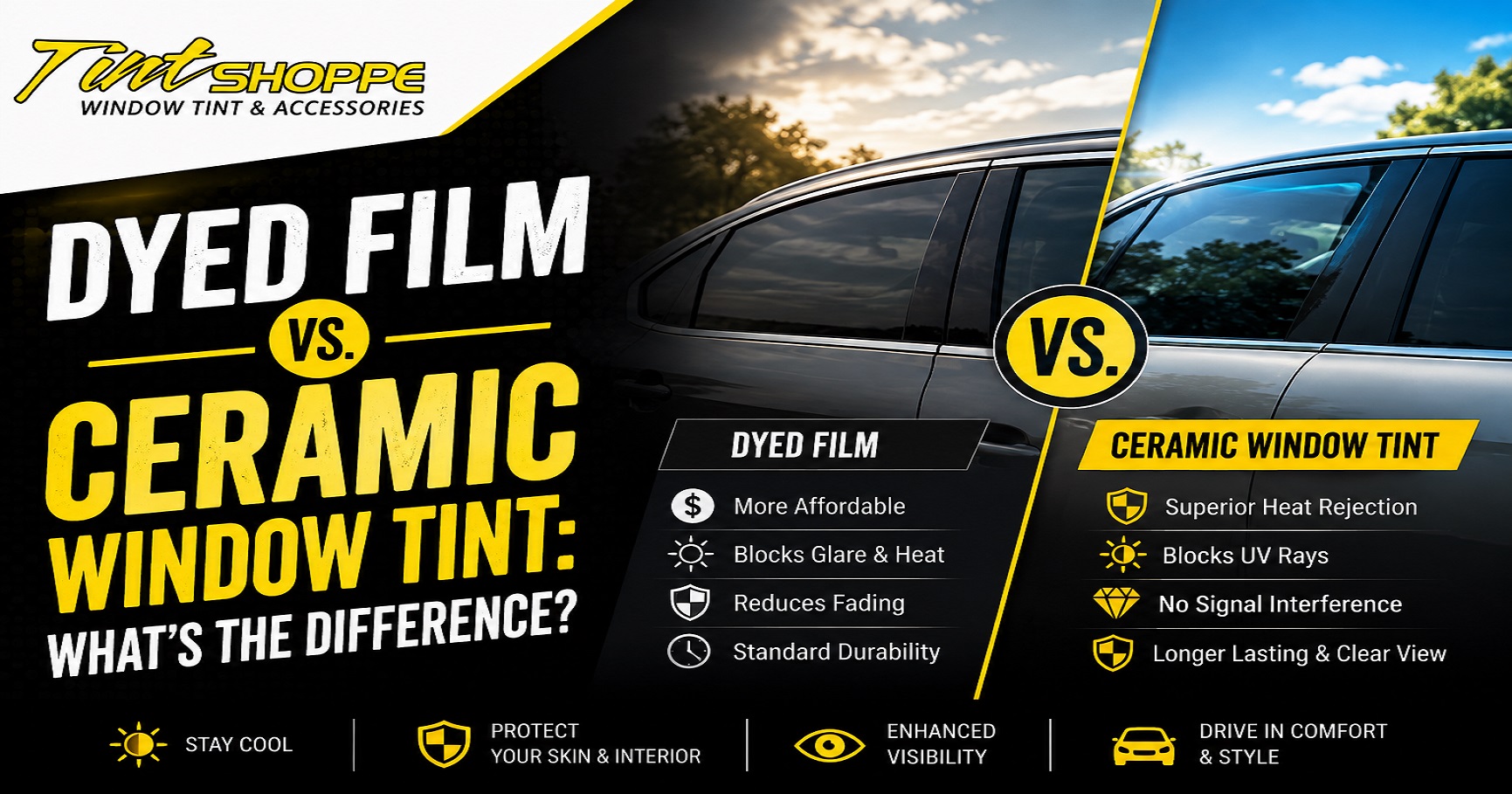
Choosing a window tint isn’t always as simple as picking the darkest shade or the lowest price. The type of film you install can affect how comfortable your vehicle feels on hot days, how well your interior is protected from UV rays, and even how your tint looks years down the road.
The differences aren’t always obvious until you look beyond the appearance. A closer look at ceramic tint vs dyed tint shows how each film performs in terms of heat, durability, and everyday driving comfort, making it easier to decide which option suits your vehicle.
This window tint comparison looks at how each film works, where each one performs best, and what to keep in mind when choosing the right option for your vehicle.
What Is Dyed Window Tint?
Dyed window tint is the most budget-friendly option on the market and has been around for decades. It gets its name from the dye layer sandwiched between the film’s adhesive and a protective polyester top coat, giving it a dark, flat appearance.
How Dyed Window Tint Works
The dyed layer works by absorbing part of the sunlight that passes through your windows. That helps cut down on glare and reduces some of the heat entering the cabin, making everyday drives a little more comfortable.
Advantages of Dyed Window Tint
- Affordable, the lowest upfront cost of any tint type
- Sleek, matte black look for a classic finish
- Good privacy and glare reduction for everyday driving
- Blocks a meaningful amount of UV rays, protecting skin and upholstery
What Is Ceramic Window Tint?
Ceramic window tint is the newer, more advanced technology in tinting. Instead of dye, it uses tiny ceramic particles that are non-metallic and non-conductive, helping block infrared heat and UV rays without interfering with radio or GPS signals.
How Ceramic Window Tint Works
Ceramic window film contains microscopic ceramic particles that help reduce infrared heat entering your vehicle. At the same time, it allows plenty of visible light to pass through, so you can enjoy a cooler cabin without making the windows look excessively dark.
Benefits of Ceramic Window Tint
- Superior heat rejection, keeping the cabin noticeably cooler
- Blocks up to 99% of UV rays, reducing sun damage
- No signal interference with phones, GPS, or toll transponders
- Fade-resistant holds its color and performance for years
- Clearer optical quality, so visibility stays sharp in darker shades
Dyed Film vs Ceramic Window Tint: Step-by-Step Comparison
When it comes down to it, ceramic tint vs dyed tint isn’t just about price; it’s about performance across nearly every category that matters for daily driving. Weighing ceramic tint and dyed tint side by side makes the differences much easier to see.
| Category | Dyed Window Tint | Ceramic Window Tint |
| Heat Rejection | Moderate | Excellent |
| UV Protection | Good (95%+) | Superior (99%+) |
| Glare Reduction | Good | Excellent |
| Durability | 5–7 years | 10+ years |
| Appearance | Flat, matte black | Rich, non-metallic finish |
| Signal Interference | None | None |
| Cost | Lower | Higher |
| Energy Efficiency | Fair | Strong |
| Privacy & Security | Good | Excellent |
Heat Rejection Comparison
Dyed tint reduces heat by absorbing sunlight, offering moderate relief. Ceramic tint reflects infrared heat before it penetrates the glass, keeping interiors noticeably cooler, often the biggest reason drivers upgrade.
UV Protection Comparison
Anyone who’s owned a car for several years has probably seen what constant sun exposure can do to the interior. Window tint helps slow that process, and ceramic film provides the highest level of UV protection between the two options.
Glare Reduction Comparison
Most drivers notice glare when the sun is low in the sky or bright headlights are coming toward them. Both films help make those situations easier to deal with, though ceramic film usually keeps the view slightly clearer.
Durability and Lifespan
No window film stays exactly the same forever, especially if a vehicle spends a lot of time in the sun. Dyed film may begin to fade over time, while ceramic film is known to maintain its appearance longer.
Appearance and Style
Dyed tint has a flat, uniform black look that many people like for its classic, no-frills style. Ceramic tint looks a little different up close. It has more depth to the finish and doesn’t carry the slight metallic sheen that older films sometimes had, so it tends to still look good years after installation.
Signal Interference
Neither film uses metal, so you won’t run into interference with your phone signal, GPS, radio, or toll passes.
Cost Comparison
Dyed tint is the more affordable choice upfront. Ceramic tint costs more per window, but many drivers see it as a worthwhile investment given its performance and lifespan.
Energy Efficiency and Interior Comfort
Anyone who’s climbed into a car after it’s been sitting in the sun knows how quickly the cabin heats up. Ceramic film helps keep more of that heat out, making the interior feel more comfortable once you get on the road.
Privacy and Security
Both films add privacy, but ceramic’s clarity combined with darker shade options gives drivers a stronger sense of security without sacrificing visibility.
Ultimately, choosing between ceramic tint and dyed tint comes down to how much you’re willing to spend for long-term performance versus a lower upfront cost with solid, basic protection.
How to Choose the Right Window Tint for Your Car
Deciding on ceramic tint vs dyed tint often comes down to a few honest questions:
- What’s your budget? Dyed film wins if cost is the priority.
- How hot does it get where you drive? Ceramic performs much better in intense heat.
- How long will you keep the car? Long-term ownership makes ceramic’s durability pay off.
- Do you care about the look? Ceramic has a richer, more premium finish.
If you’re searching for reliable Car window tinting Woodbridge drivers trust, a local shop can walk you through samples in person before you commit.
Professional Installation Matters
A good installation isn’t something most people notice right away, but they usually notice when it’s done badly. Bubbles, peeling edges, and uneven cuts often come down to how the film was installed. That’s why many drivers looking for Window tint Woodbridge services choose an experienced shop that stands behind its work.
Common Myths About Window Tint
- “All tint fades the same way.” Not true, ceramic resists fading far better than dyed film.
- “Darker tint always means better heat rejection.” Shade, darkness and heat rejection aren’t the same thing; a lighter ceramic film can outperform a darker dyed film.
- “Tint ruins radio or GPS signal.” Both types are non-metallic and won’t interfere with signals.
- “Any tint is illegal.” Legal darkness varies by state, but both types are available in shades that comply with state laws.
- “Cheap tint always looks bad.” Installation quality matters as much as the film itself.
Bottom Line
Both dyed and ceramic window tint have their place. If you want an affordable way to add privacy, style, and decent sun protection, dyed film gets the job done. But if you want the best heat rejection, UV protection, and a film that still looks great a decade from now, ceramic tint vs dyed tint isn’t really a close call; ceramic is the clear long-term winner.
Ready to make the switch or just want expert advice on which film fits your car and budget? Why not let a professional walk you through your options in person? Call Tint Shoppe today at (703) 491-8300 and get a quote that actually makes sense for your vehicle.
FAQs
What is the main difference between dyed film and ceramic window tint?
Dyed film absorbs sunlight using a dye layer, while ceramic film uses reflective particles to block heat and UV rays more efficiently without darkening the glass as much.
Is ceramic window tint worth the extra cost?
For most drivers, yes. The added heat rejection and durability mean you pay more upfront but save on replacement and enjoy better comfort for years.
Does ceramic tint block more heat than dyed tint?
Yes. Ceramic tint consistently outperforms dyed tint in heat rejection thanks to its reflective particle technology.
Which window tint lasts longer?
Ceramic tint typically lasts 10 or more years, while dyed tint usually needs replacing after 5 to 7 years.
Can dyed window tint is best for hot climates?
Dyed tint offers moderate relief, but it isn’t as strong in extreme heat as ceramic.
Which window tint is best for hot climates?
Ceramic tint is the better choice for hot climates thanks to its superior infrared heat rejection and fade resistance.
Is ceramic window tint legal in my state?
Legality depends on your state’s tint darkness laws, not the film type. Both dyed and ceramic films come in legal shade options. Check your state’s window tint laws or ask your installer.
Can I upgrade from dyed tint to ceramic tint later?
Yes. Your installer can remove the old dyed film and apply ceramic tint whenever you’re ready.