 (703) 491-8300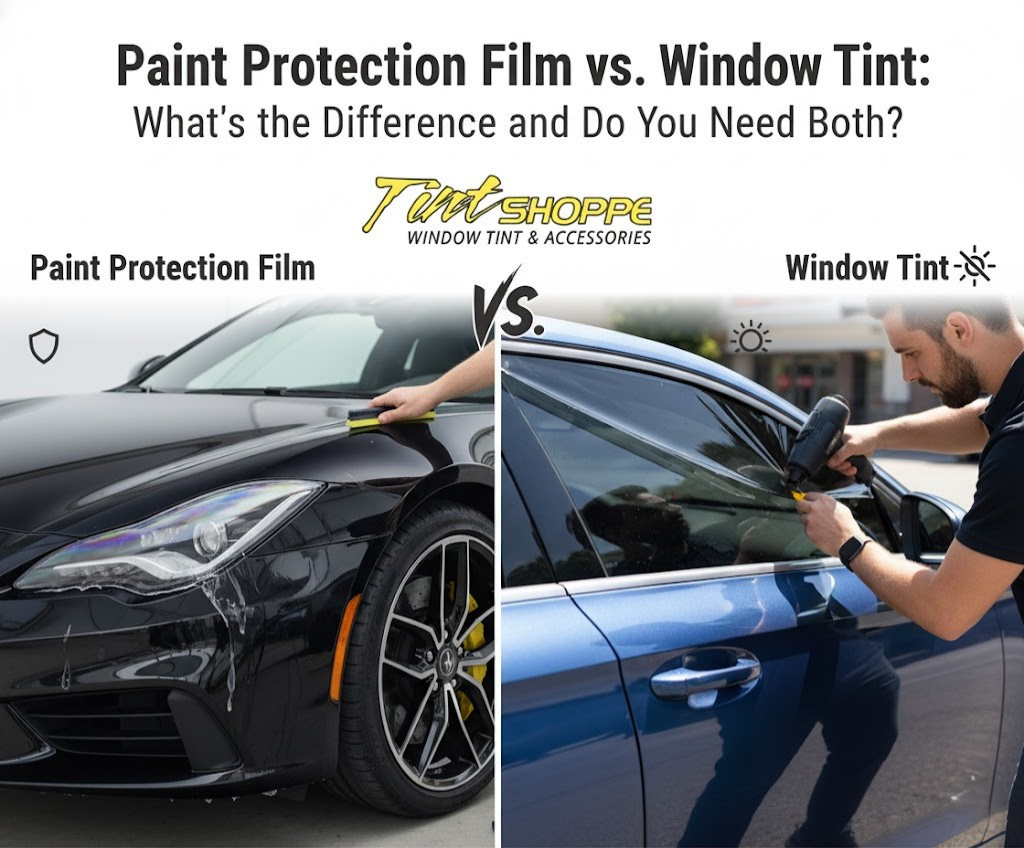
When it comes to protecting your vehicle, few upgrades deliver as much long-term value as paint protection film (PPF) and window tint. While both offer protection and enhance your vehicle’s appearance, they serve very different purposes.
Many drivers assume they need one or the other, but the truth is — PPF and tint complement each other perfectly. One defends your car’s exterior paint from damage, while the other safeguards you and your interior from the harsh effects of the sun.
If you’re a driver in Virginia who wants to preserve your vehicle’s look, value, and comfort, understanding the difference between the two is essential. Let’s break down what each does, how they work, and why many car owners choose to get both.
1. What is Paint Protection Film (PPF)?
Paint Protection Film (PPF), also known as clear bra, is a transparent urethane film applied to the painted surfaces of your vehicle. Its main goal is to protect your car’s paint from physical damage, such as:
- Rock chips and gravel impact
- Road debris and scratches
- Bug acids and bird droppings
- Minor abrasions and swirl marks
- Harsh UV exposure that causes paint fading
Modern PPF is nearly invisible, extremely durable, and often features self-healing properties — meaning minor scratches and scuffs disappear with heat or sunlight.
PPF is usually applied to high-impact areas such as:
- Front bumper
- Hood and fenders
- Side mirrors
- Door edges and handles
- Rocker panels
Premium PPF can last 7 to 10 years when professionally installed and properly maintained.
2. What is Window Tint?
Window tint is a thin, tinted film applied to your car’s windows to reduce heat, glare, and UV exposure. Unlike PPF, which protects your car’s paint, tint focuses on improving comfort and safety inside your vehicle.
Quality tint films can:
- Block 99% of harmful UV rays
- Reduce interior heat by up to 60%
- Protect upholstery from fading and cracking
- Minimize glare for safer driving
- Add privacy and a sleek, stylish look
Tint comes in different shades and technologies — from dyed and carbon to advanced ceramic films that reject infrared heat without being overly dark.
For drivers in Virginia, choosing the right tint shade also means staying compliant with local tint laws, which regulate how dark you can go on front and rear windows.
3. The Core Difference Between PPF and Window Tint
Although both films serve as protective layers, their functions are distinct:
| Feature | Paint Protection Film (PPF) | Window Tint |
| Purpose | Protects exterior paint from physical damage | Reduces heat, glare, and UV exposure inside the cabin |
| Material | Clear urethane film | Tinted polyester film |
| Appearance | Transparent or slightly glossy | Dark or light tint shades |
| Main Benefit | Prevents scratches, chips, and fading | Improves comfort, privacy, and energy efficiency |
| Placement | Applied to painted surfaces | Applied to glass windows |
| Longevity | 7–10 years | 5–10 years depending on film type |
| Cost Range | Higher (premium protective product) | Moderate to affordable |
| Maintenance | Minimal, easy to clean | Requires gentle cleaning and care |
In short, PPF protects the exterior, while tint enhances the interior — together, they create a complete protection system for your vehicle.
4. Benefits of Paint Protection Film (PPF)
A. Preserves Your Car’s Paint Finish
PPF shields your paint from rock chips, scratches, and environmental damage, maintaining that glossy showroom finish.
B. Self-Healing Technology
Modern films automatically repair small scratches with exposure to heat or sunlight, keeping your car looking new longer.
C. UV and Oxidation Resistance
Just like sunscreen for your paint, PPF prevents fading and discoloration caused by long-term UV exposure.
D. Boosts Resale Value
A car with spotless, chip-free paint always fetches a better resale price — PPF protects your investment.
E. Long-Lasting Protection
Quality films last nearly a decade with proper care, offering years of peace of mind against road wear and tear.
5. Benefits of Window Tint
A. Superior Heat Rejection
Tinted windows keep your cabin cooler by blocking infrared and solar heat — perfect for Virginia’s warm summers.
B. UV Protection for Passengers
UV rays are harmful not just to your car but also to your skin. Tint blocks up to 99% of UV rays, reducing long-term exposure risks.
C. Privacy and Security
Tint makes it harder for prying eyes to see inside your vehicle, adding a layer of safety and discretion.
D. Reduced Glare and Eye Strain
Tint cuts down the blinding glare from sunlight or headlights, making driving safer and more comfortable.
E. Interior Preservation
By reducing heat and UV light, tint prevents your upholstery, dashboard, and trim from fading or cracking.
6. Can You Have Both PPF and Tint Installed?
Absolutely! In fact, combining the two is one of the best ways to protect your car inside and out.
Here’s how they work together:
- PPF protects your vehicle’s exterior from chips, scratches, and fading.
- Tint shields your interior from UV rays, heat, and glare.
Installing both provides complete coverage against physical and environmental damage. Many Virginia car owners choose both services at once for maximum convenience and long-term value.
7. Should You Install PPF or Tint First?
If you plan to get both, professionals usually recommend installing the paint protection film first.
This allows the PPF to properly adhere to the painted surfaces before tint installation, preventing moisture or contamination transfer between layers. Once PPF is applied and cured, window tint can be safely installed.
Always have both services performed by trained experts to ensure proper fit, adhesion, and compliance with state tint laws.
8. Maintenance and Care for PPF and Tint
To keep both films looking great for years, follow these maintenance tips:
- Wait 48–72 hours before washing your car after installation.
- Use only pH-balanced, ammonia-free cleaners on both tint and PPF.
- Avoid pressure washing directly at edges.
- Dry with a soft microfiber towel to prevent scratches.
- Park in shaded or covered areas when possible to extend film life.
Proper care ensures your investment continues to protect your vehicle effectively.
9. Cost Comparison: PPF vs. Tint
|
Service |
Average Cost (Range) | Lifespan |
Main Benefit |
| Paint Protection Film | $$$ – higher investment | 7–10 years | Paint preservation and self-healing |
| Window Tint | $$ – moderate cost | 5–10 years | Comfort, privacy, and UV protection |
While PPF costs more upfront, it prevents expensive paint repairs later. Tint, on the other hand, improves comfort and style instantly. Most drivers find that both offer excellent long-term value.
10. Why Virginia Drivers Should Consider Both
Driving conditions in Virginia — from sunny highways to gravel roads — can be tough on vehicles. PPF helps prevent paint damage caused by debris and harsh weather, while tint keeps your interior cool and compliant with local laws.
When professionally installed, these two services enhance both the look and longevity of your vehicle. You’ll enjoy cooler rides, flawless paint, and increased resale value — all while driving in style.
FAQs: Paint Protection Film vs. Window Tint
- Do PPF and window tint serve the same purpose?
No. PPF protects your car’s paint from scratches and chips, while tint protects the interior from heat, glare, and UV rays. - Can I apply PPF over my car’s entire body?
Yes. Full-body PPF coverage offers the highest level of protection but is more expensive than partial coverage on high-impact areas. - Will paint protection film change my car’s color?
Not at all. PPF is clear and invisible, though some types have a glossy or matte finish that can slightly alter surface shine. - Is ceramic tint better than regular tint?
Yes. Ceramic tint offers superior heat rejection, UV protection, and clarity without needing to be very dark. - How long does PPF last compared to tint?
Both can last up to a decade with professional installation and proper care, though PPF typically lasts slightly longer. - Can both PPF and tint be removed?
Yes. Both can be safely removed without damaging your paint or windows when handled by professionals. - Will tint affect my car’s resale value?
Quality tint enhances resale value by protecting your interior and maintaining a stylish, well-kept look. - Does PPF really self-heal?
Yes. Modern films use heat-activated polymers that repair light scratches and scuffs automatically. - Should I get both PPF and tint together?
Definitely, together, they offer the ultimate inside-and-out protection — perfect for long-term vehicle care. - How can I choose the right combination for my car?
It depends on your vehicle type, driving habits, and climate. Our experts at Tint Shoppe can recommend the best setup for your needs and budget.
Final Thoughts
While Paint Protection Film and Window Tint have different functions, they complement each other perfectly. PPF preserves your vehicle’s paint from physical damage, and tint protects your interior from the sun’s heat and harmful rays.
For Virginia drivers who value their vehicles’ appearance and comfort, investing in both is the smartest move. You’ll enjoy a cooler cabin, longer-lasting paint, and peace of mind every time you hit the road.
At Tint Shoppe, our certified technicians specialize in professional-grade tinting and paint protection film installations. We help your car stay beautiful, comfortable, and protected — inside and out.