
 (703) 491-8300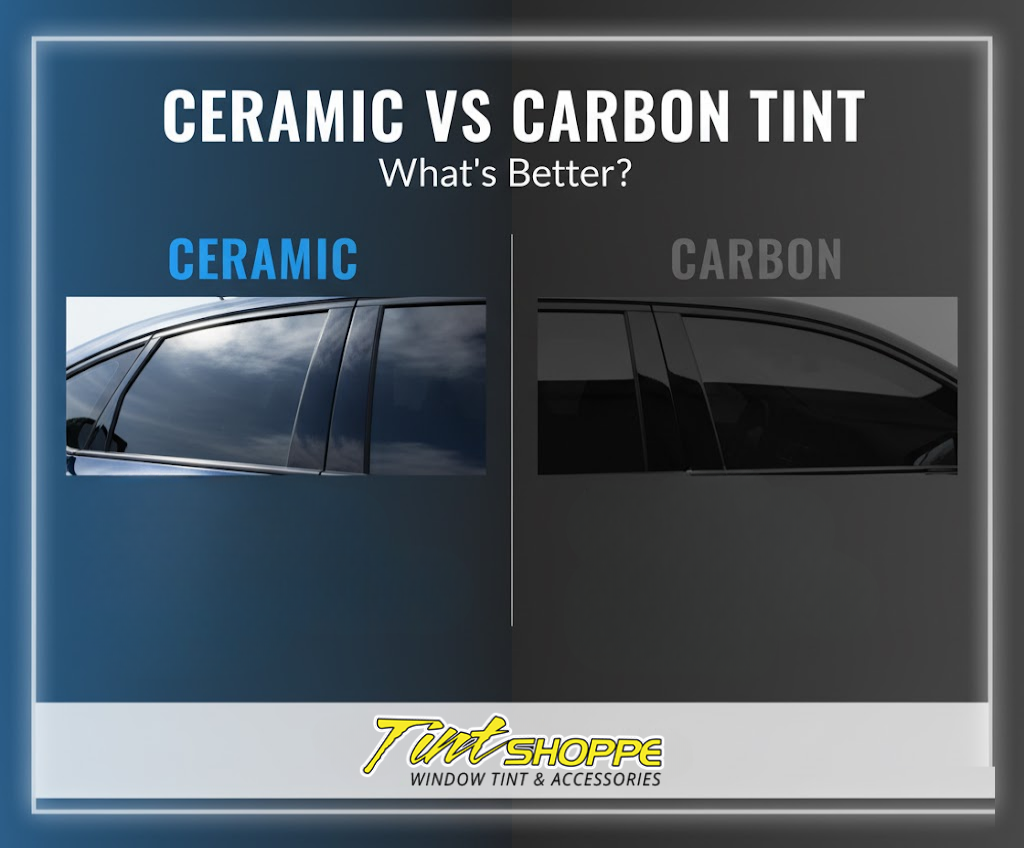
When it comes to upgrading your vehicle’s windows, tinting is more than just about looks — it’s about comfort, protection, and performance. Two of the most popular types of window tint today are ceramic and carbon. Both offer impressive benefits, but they’re designed with different technologies and cater to different needs.
Whether you want to reduce heat, block UV rays, or enhance privacy, understanding the difference between these two tints is essential before making your choice. At Tint Shoppe, we’ve helped countless drivers choose the perfect tint for their vehicles — and we’re breaking it all down right here to help you make an informed decision.
Let’s dive into the key differences between ceramic and carbon tint, explore their pros and cons, and figure out which one suits your vehicle best.
1. Understanding Window Tint Technology
Before comparing the two, it’s important to understand how modern tint films work. Window tints are made of multiple layers designed to:
- Block sunlight and heat
- Filter harmful UV rays
- Reduce glare and eye strain
- Add privacy and enhance style
The main difference between ceramic and carbon tint lies in the materials and technology used in each layer. This impacts how well they perform under heat, how long they last, and how they look on your vehicle.
2. What Is Carbon Window Tint?
Carbon tint is made from microscopic carbon particles that are infused into the film. Unlike traditional dyed tints, carbon doesn’t fade over time, making it more durable and reliable.
Key Features of Carbon Tint:
- Excellent heat rejection: Carbon tint reflects infrared light, keeping your cabin cooler.
- No metal interference: It doesn’t use metal, so there’s no disruption to GPS, radio, or phone signals.
- Deep matte finish: Carbon tint offers a rich, dark tone that enhances your vehicle’s appearance.
- UV protection: Blocks up to 99% of harmful UV rays that can damage skin and interiors.
Drawbacks:
While carbon tint is durable and effective, it doesn’t block as much heat as ceramic tint. It’s a fantastic mid-range option for drivers who want strong performance without paying a premium.
3. What Is Ceramic Window Tint?
Ceramic tint represents the most advanced window tinting technology available today. It’s made using non-metallic, nano-ceramic particles that are invisible to the naked eye but extremely effective at blocking heat and UV radiation.
Key Features of Ceramic Tint:
- Superior heat rejection: Ceramic films block up to 95% of infrared heat, keeping your car significantly cooler.
- Crystal-clear visibility: They reduce glare without darkening your view, ideal for day and night driving.
- UV protection: Offers nearly 100% UV rejection, protecting you and your interior from sun damage.
- Signal friendly: Like carbon tint, ceramic doesn’t interfere with GPS, cell, or radio signals.
- Durability: Ceramic films are scratch-resistant and maintain their color for years.
Drawbacks:
The only downside is cost. Ceramic tints are the most expensive type due to their advanced technology, but they provide unmatched comfort and longevity — making them a worthwhile investment.
4. Heat Rejection and Comfort
One of the biggest reasons drivers choose premium tint films is to keep their vehicles cool.
- Carbon tint does a good job blocking sunlight and heat but typically filters out 40% to 60% of infrared rays.
- Ceramic tint, on the other hand, blocks up to 95% of infrared radiation, significantly reducing heat buildup inside your car.
If you live in a hot or sunny climate, ceramic tint provides superior comfort, especially during long drives or when your vehicle is parked outdoors.
5. Clarity and Visibility
Visibility matters — both for safety and comfort.
- Carbon tint has a slightly darker matte appearance, which can reduce visibility slightly at night, especially in very dark shades.
- Ceramic tint maintains clarity while cutting down on glare, allowing clear views even during low-light driving.
If nighttime visibility is a priority, ceramic is the better choice. It delivers a more balanced tint that doesn’t compromise clarity.
6. Durability and Longevity
Both carbon and ceramic tints are highly durable compared to older dyed films.
However, ceramic tint edges ahead with superior resistance to fading, cracking, or discoloration. It’s also less likely to bubble over time, maintaining a flawless finish for years.
Carbon tint, while long-lasting, may experience minimal fading after several years, especially in extreme sun exposure.
7. UV and Infrared Protection
Both tint types offer excellent UV protection, safeguarding your skin and preventing your car’s interior from fading or cracking.
But when it comes to infrared protection — the main source of heat — ceramic tint far outperforms carbon. It not only blocks heat more effectively but also keeps your cabin temperature more consistent throughout the day.
8. Cost and Value
Cost is a major factor for most car owners.
- Carbon tint is generally more affordable and delivers excellent performance for the price.
- Ceramic tint is more expensive, but it provides the best possible protection, visibility, and comfort.
If you’re planning to keep your vehicle for several years, ceramic tint’s durability and energy savings often make it the better long-term value.
9. Appearance and Style
Carbon tint is known for its deep matte finish, which gives a bold, elegant look. Ceramic tint, meanwhile, provides a more glossy, color-stable appearance that enhances any vehicle’s aesthetics.
Both look great, but ceramic offers a more refined finish that tends to complement luxury and newer vehicles especially well.
10. Which One Should You Choose?
Choosing between ceramic and carbon tint depends on your budget, driving environment, and personal preference.
| Feature | Carbon Tint | Ceramic Tint |
| Heat Rejection | Moderate (up to 60%) | Excellent (up to 95%) |
| UV Protection | 99% | 99.9% |
| Visibility | Good | Excellent |
| Signal Interference | None | None |
| Durability | High | Very High |
| Price | More Affordable | Premium |
If you want solid performance at a lower cost, carbon tint is a great choice. But if you’re looking for top-tier performance, maximum comfort, and long-term durability, ceramic tint is worth the investment.
11. Professional Installation Matters
No matter which tint you choose, installation quality is what determines how well it performs. A poorly installed tint — even a premium ceramic one — can bubble, peel, or fade prematurely.
At Tint Shoppe, expert installation ensures every window is properly prepped, fitted, and sealed. Proper installation not only improves performance but also keeps your warranty valid and your vehicle looking flawless for years.
12. Maintenance Tips for Tinted Windows
Once your tint is installed, proper care is essential for longevity:
- Wait at least 3 to 5 days before cleaning newly tinted windows.
- Use a soft microfiber cloth and ammonia-free cleaner.
- Avoid rolling down windows immediately after installation.
- Don’t use sharp tools or abrasive materials on the film.
With these habits, your tint will maintain its color, clarity, and effectiveness for many years.
FAQs About Ceramic vs Carbon Window Tint
- Is ceramic tint worth the extra cost?
Yes. Ceramic tint provides the best heat rejection, UV protection, and clarity, making it ideal for long-term value and comfort. - Does ceramic tint make a car cooler than carbon tint?
Absolutely. Ceramic tint blocks significantly more infrared heat, keeping your cabin cooler in hot weather. - Will carbon tint fade over time?
Carbon tint is highly durable and fade-resistant, but after several years of intense sunlight, it may slightly lose color depth. - Can both tints block UV rays effectively?
Yes. Both carbon and ceramic tints block more than 99% of harmful UV rays that damage skin and interiors. - Do ceramic or carbon tints interfere with signals?
Neither film type interferes with radio, GPS, or cell phone signals, unlike older metallic tints. - Which tint is better for night driving?
Ceramic tint is better because it maintains high visibility while reducing glare, even in darker shades. - How long do ceramic and carbon tints last?
Carbon tint typically lasts 5 to 7 years, while ceramic tint can last 10 years or more with proper care. - Can I clean tinted windows like normal glass?
Use only ammonia-free cleaners and soft microfiber cloths to prevent scratching or peeling. - Does tint percentage affect performance?
Yes. Darker shades provide more privacy, but even lighter ceramic tints can block high levels of heat and UV rays. - Which tint adds more resale value to my car?
Ceramic tint often adds greater resale appeal thanks to its premium quality, durability, and comfort benefits.
Final Thoughts
Both ceramic and carbon tints offer outstanding performance and protection compared to traditional films, but ceramic tint stands at the top for those who want the best in comfort, visibility, and heat control.
If you’re looking for a more affordable yet reliable option, carbon tint delivers excellent value and long-lasting performance.
Ultimately, the choice depends on your needs, driving habits, and budget. At Tint Shoppe, our team helps you find the perfect balance of performance, privacy, and style — so your vehicle not only looks incredible but feels cooler, safer, and more comfortable every day.