 (703) 491-8300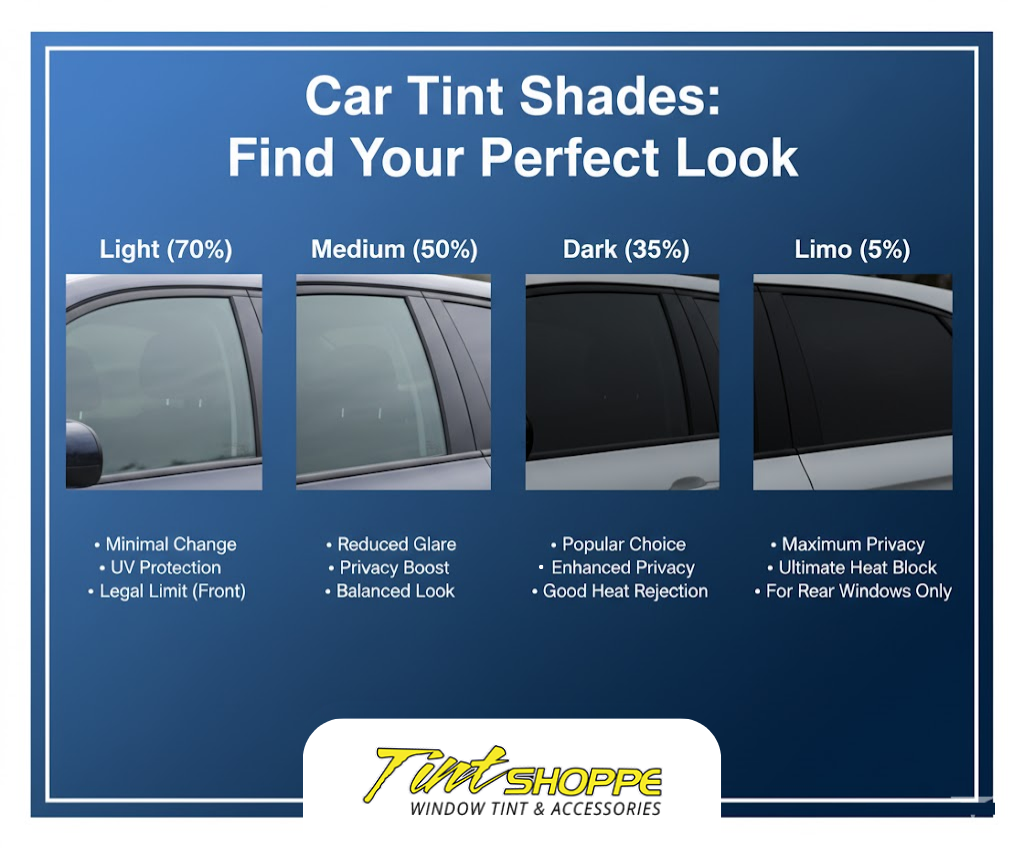
Window tinting is one of the simplest yet most powerful ways to upgrade your vehicle. It instantly transforms the way your car looks, feels, and performs on the road. Whether you’re going for a sleek, modern aesthetic or prioritizing comfort and privacy, choosing the right car tint shade makes all the difference.
At Tint Shoppe, we know that every driver has a unique style — and every car deserves the perfect finish. But beyond looks, tint shades affect heat rejection, visibility, and even how legal your tint is in your state. That’s why finding the right tint isn’t just about what looks good, but also what fits your lifestyle and local regulations.
Let’s explore everything you need to know about car tint shades, from how tint percentages work to how to choose the perfect balance between style, performance, and compliance.
1. Understanding Window Tint Shades
Window tint shade refers to how dark or light the film appears on your windows. It’s measured by Visible Light Transmission (VLT%), which represents the percentage of light that can pass through the film.
- Higher VLT% = Lighter tint (lets in more light)
- Lower VLT% = Darker tint (blocks more light and increases privacy)
For example:
- 70% tint allows 70% of light through — barely noticeable.
- 20% tint allows only 20% of light through — providing a darker, more private look.
Understanding this number is the first step in choosing your perfect shade.
2. The Most Popular Car Tint Shades
While there are dozens of options available, some tint shades have become clear favorites among drivers.
50% Tint – Subtle and Stylish
This light tint blocks glare and some UV rays while keeping your cabin bright. It’s ideal for drivers who prefer a clean, almost factory-like look with added comfort.
35% Tint – Balanced and Elegant
This is one of the most popular tint levels. It offers a great balance between visibility and privacy while adding a noticeable, refined look. Perfect for daily commuters and family vehicles.
20% Tint – Dark and Private
With 20% VLT, people outside can barely see into your car during the day. It’s a favorite among those who value privacy or want a bold, dramatic style.
5% Tint – The Deepest Black
Also known as “limo tint”, 5% provides maximum privacy and style. However, it can significantly reduce visibility at night and may not be legal in all states.
3. How Tint Shades Affect Your Driving Experience
Tint shades do more than just change how your car looks — they impact your comfort and safety too.
- Visibility: Lighter shades improve visibility, especially during night driving.
- Heat reduction: Darker tints block more infrared light, keeping your cabin cooler.
- Glare control: Mid-range shades (like 35%) cut glare from headlights and sunlight.
- Privacy: The darker the tint, the more difficult it is for others to see inside your car.
Finding your perfect shade means balancing these factors based on your climate, driving habits, and style preferences.
4. Matching Tint Shades to Your Vehicle Type
Every vehicle has its own personality, and your tint should complement that.
- Luxury Cars: A 35% tint gives a classy, sophisticated finish that complements polished exteriors.
- Sports Cars: 20% or 15% provides an aggressive, high-performance look that turns heads.
- SUVs and Trucks: Many owners choose 20% or darker for enhanced privacy and a rugged, commanding style.
- Family Sedans: 35% to 50% is perfect for comfort, safety, and a clean appearance.
Your car’s color also matters — dark-colored vehicles often look best with slightly lighter tints, while silver or white cars can pull off darker shades beautifully.
5. Legal Tint Limits: What You Should Know
Every state has its own laws governing how dark your tint can be. Some states allow darker rear windows but require lighter front windows for driver visibility.
For example, many states only allow around 35% tint on the front side windows but permit darker tints on the rear. Always check your local tint regulations before choosing a shade — staying compliant ensures you avoid fines and keeps your vehicle street-legal.
At Tint Shoppe, we help drivers select shades that match both their style and their local tint laws.
6. The Role of Tint Shade in Heat Rejection
Darker tint shades block more visible light, but heat rejection depends more on the film type than color alone.
- A dark dyed film might look great but won’t necessarily keep your cabin cool.
- A light ceramic tint can reject more heat even if it appears nearly clear.
If comfort is your goal, go for ceramic or carbon tint films — they block heat effectively without requiring a very dark shade.
7. Aesthetic and Privacy Benefits
Your tint shade changes how your car feels from the inside out.
- For a sleek, luxury look: 35% to 20% provides the perfect balance.
- For maximum privacy: 5% or 15% gives your car that VIP finish.
- For a clean, natural feel: 50% adds just enough tone to reduce glare without altering your car’s character.
Tint also enhances your car’s resale value by protecting the interior and giving it a premium appearance that buyers love.
8. Daytime vs Nighttime Visibility
A tint that looks perfect during the day might be too dark at night.
- Lighter tints (50% to 35%) are ideal for night driving and low-light conditions.
- Darker tints (20% and below) can make reversing or parking in the dark more difficult.
If you drive often at night, consider a lighter ceramic film that offers both clarity and comfort.
9. Custom Tint Combinations
You don’t have to use the same tint shade on every window. Many drivers combine different VLT levels for both style and legality.
- Windshield (upper strip): Usually 50% or lighter for glare reduction.
- Front windows: Around 35% to stay compliant in most states.
- Rear windows: 20% or darker for privacy and UV protection.
A professional installer can help you achieve the perfect gradient look while keeping your setup fully legal.
10. Professional Installation vs DIY Kits
While DIY tint kits might seem appealing, professional installation makes all the difference. Professionals ensure:
- Smooth, bubble-free application
- Correct trimming and fitting
- Compliance with local laws
- Warranty-backed results
At Tint Shoppe, we use high-quality films and precision techniques to give every customer a clean, factory-quality finish that lasts for years.
11. How to Maintain Your Tint Shade
Once you’ve found your perfect shade, maintenance is simple but essential:
- Wait 3 to 5 days before cleaning after installation.
- Always use ammonia-free cleaners and a soft microfiber cloth.
- Avoid rolling down windows during the curing period.
- Park in shaded areas to extend tint life.
With proper care, your tint will retain its clarity, color, and performance for years.
FAQs About Car Tint Shades
- What does the percentage mean in window tint?
The percentage represents how much visible light passes through. For example, 20% tint lets in 20% of visible light — it’s darker than 50%, which allows more light. - What tint shade is the best for privacy?
A 20% or 15% tint offers strong privacy while maintaining decent visibility. A 5% tint provides maximum privacy but can reduce night visibility. - Can I use different shades on the front and back windows?
Yes, many drivers do. Front windows are usually lighter (like 35%) for legal compliance, while rear windows can be darker for privacy. - Which tint shade keeps my car coolest?
While darker tints block more light, the tint type matters more. Ceramic tints offer the best heat rejection, even in lighter shades. - What’s the darkest legal tint?
It varies by state, but most allow around 35% on front windows and darker tints on rear ones. Always verify your local regulations before choosing. - Does darker tint improve safety?
Yes and no. It reduces glare and eye strain, improving visibility during the day, but extremely dark tints can make night driving more challenging. - How long does window tint last?
High-quality films like ceramic or carbon tints can last 8–10 years or more with proper care and professional installation. - Will tint shades affect my car’s resale value?
A well-chosen, professionally installed tint often increases resale value by protecting your interior and enhancing appearance. - Can I tint my windshield?
You can tint the upper sun strip or, in some states, use a very light full windshield tint. Laws vary, so always check before installation. - Should I go darker for better UV protection?
Not necessarily. Even lighter ceramic films block nearly 99% of UV rays while maintaining excellent visibility.
Final Thoughts
Finding your perfect tint shade is about more than aesthetics — it’s about comfort, protection, and confidence behind the wheel. Whether you prefer a subtle, natural tone or a bold, private finish, there’s a tint shade that fits your car and lifestyle.
At Tint Shoppe, we help you select the ideal tint for your needs, ensuring it looks great, feels cool, and meets all local tint regulations. With professional installation and high-quality materials, your car will stay stylish, comfortable, and protected for years to come.