 (703) 491-8300
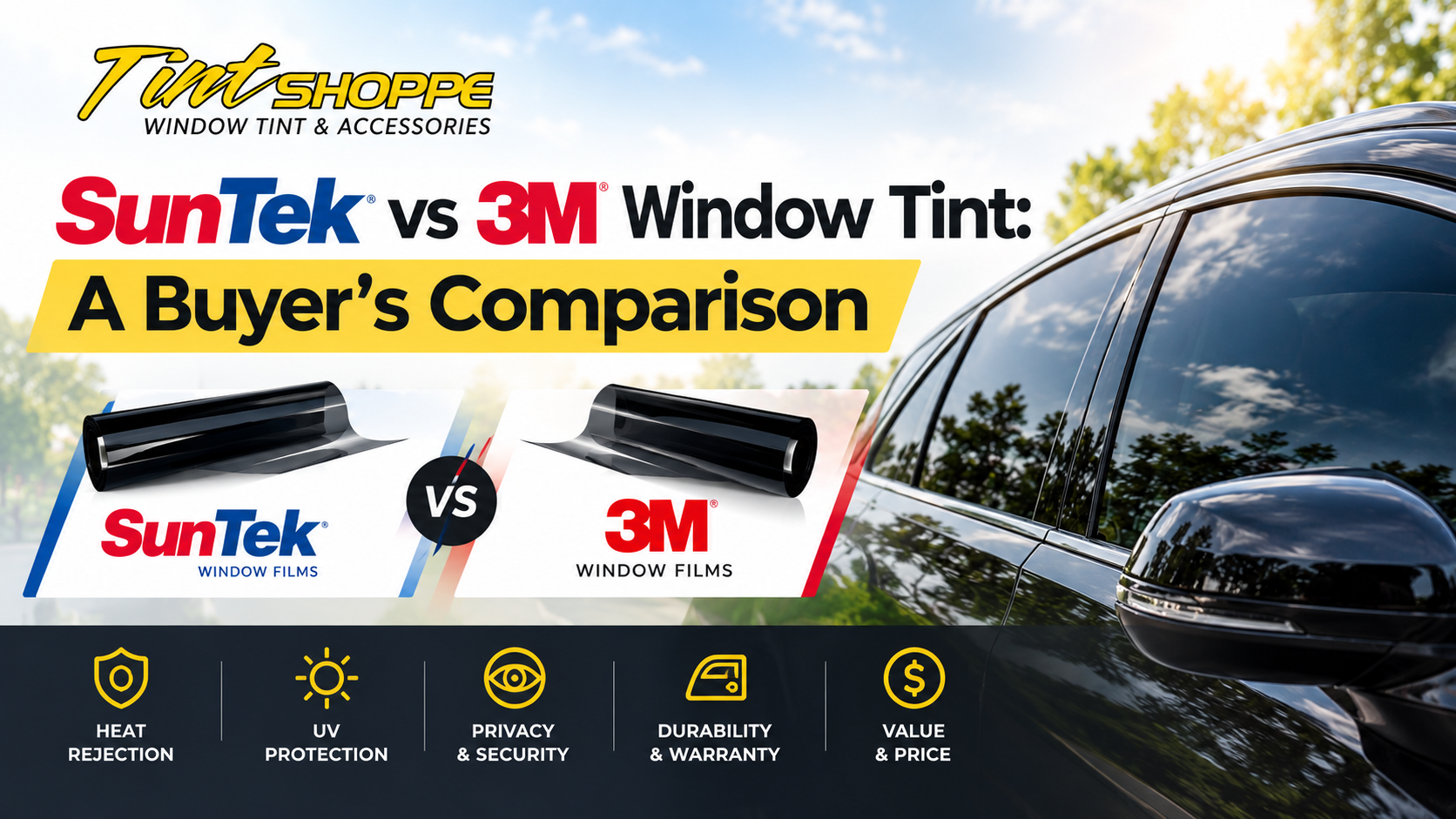
When it comes to choosing window tint, only two companies really stand out: SunTek and 3M. Both manufacturers offer a range of film technologies, including conventional dyed or carbon-based types as well as more advanced ceramic films designed for better heat rejection. The problem is that the names themselves don’t indicate how a specific film will perform in your vehicle.
This article compares the film lines, heat rejection, UV protection, clarity, signal performance, pricing, warranties, and long-term durability of both brands.
SunTek Window Tint: Overview
SunTek is a well-established window film manufacturer with automotive products covering different performance levels and budgets. Its lineup gives drivers several ways to approach tinting rather than forcing every vehicle owner into one premium film.
For shoppers considering SunTek window tint, the specific series matters. Carbon, ceramic, and premium ceramic films are not interchangeable, even though they may all improve comfort and appearance.
Film Lines (Carbon, Carbon XP, CIR Ceramic, Evolve)
SunTek’s product range includes Carbon, CarbonXP, CIR ceramic, and Evolve. Carbon film is carbon-based and is intended to provide privacy, protect against ultraviolet radiation, and reduce heat without the reflective look found in certain earlier films.
CarbonXP sits in the higher-performance category, while CIR is a ceramic film that provides greater infrared heat rejection and optical clarity. Evolve is another premium ceramic option, aimed at drivers who want a high level of window tint heat rejection but still prefer a relatively clear look.
The variety of films available means SunTek window tint can fit different budgets, since someone who uses a car every day doesn’t need the same film as someone who spends a lot of time in a vehicle each week.
Heat Rejection & UV Protection
SunTek film technologies are designed to reduce the amount of solar energy that enters the vehicle while blocking ultraviolet radiation; ceramic films generally offer better heat control than basic carbon films, especially when infrared rejection is a key factor.
Automotive window film also provides good UV protection; it can reduce sun exposure inside the car and may help protect interior materials from the effects of prolonged sunlight.
3M Window Tint: Overview
3M is another major name in automotive window film and offers several product families aimed at different performance requirements. Its automotive lineup includes Color Stable, Ceramic Series, and Crystalline.
When comparing 3M window tint, it is important to compare the specific series rather than treating the entire brand as one product. A standard film and a premium ceramic film can have noticeably different specifications.
Film Lines (Color Stable, Ceramic Series, Crystalline)
Color Stable uses 3M’s carbon-based technology and is designed to provide a non-metallic appearance, along with protection against heat and UV radiation. The Ceramic Series improves on this performance by incorporating a ceramic build and providing better heat rejection.
Crystalline is one of the top models in the range. It is designed to reject a high proportion of solar energy while still allowing relatively high transmission of visible light. This feature may appeal to drivers who want strong heat control without the lens looking too dark.
Heat Rejection & UV Protection
3 M’s premium films are designed to reduce solar heat without compromising optical clarity; Crystalline is especially noted for combining heat rejection with lighter visible shades.
UV protection is also common to all automotive products, but specifications differ by film type, so consumers should refer to the technical data for the series they’re considering.
SunTek vs 3M: Head-to-Head Comparison
A direct SunTek vs 3M window tint comparison becomes more useful when you stop looking at brand names and compare equivalent film categories.
Heat Rejection Performance
Heat rejection depends heavily on the particular film, shade, glass, and installation. Premium ceramic films from both manufacturers can provide strong solar and infrared heat control.
The practical difference may be less dramatic than expected when comparing two similarly positioned ceramic products. If keeping the cabin comfortable is your main goal, compare the published specifications for the exact films rather than simply choosing the brand with the bigger name.
UV Protection
Both manufacturers offer films designed to block harmful UV radiation. In many cases, UV performance is less of a deciding factor than heat rejection because high-quality automotive films already provide substantial UV protection.
Still, it is worth asking for the technical specifications before installation. Film shade and construction should not be assumed based solely on the manufacturer’s name.
Clarity & Signal Interference
Modern non-metallic and ceramic films are generally designed to maintain good visibility while avoiding the signal interference associated with some older metallic films.
Both brands offer products intended to work with electronic systems such as GPS, mobile devices, and radio. If your vehicle has several integrated electronics, ask the installer which exact film is being fitted.
Pricing
Pricing varies according to vehicle size, number of windows, film series, and installation requirements. Basic carbon film typically costs less than premium ceramic products, regardless of brand.
A ceramic window tint comparison is therefore more useful when comparing similar ceramic films instead of putting an entry-level carbon product against a premium ceramic one.
Warranty Coverage
Warranty terms vary by film series and installation provider. SunTek products can be offered with substantial manufacturer warranty coverage, while 3M also provides warranty protection for eligible automotive films.
Always ask what the warranty actually covers. Peeling, bubbling, discoloration, and installation-related issues may be treated differently depending on the product and installer.
Which Film Fades or Bubbles Less Over Time?
Quality installation has a major influence on how tint looks years later. Poor preparation, contamination, improper installation, or low-quality film can lead to problems regardless of the logo printed on the packaging.
Carbon and ceramic films from reputable manufacturers are generally designed to maintain their appearance over time. Ceramic products are particularly attractive to buyers who want premium performance without the discoloration associated with older dyed films.
Rather than asking only which brand lasts longer, ask about the exact film series, installer experience, curing process, and warranty.
Which Should You Choose for Your Vehicle?
There is no universal answer because vehicles and priorities differ. Someone mainly interested in appearance and basic solar control may be satisfied with a carbon film. A driver dealing with a hot cabin every day may prefer ceramic technology.
Budget matters, too. Premium film costs more, and not every vehicle owner will feel the difference justifies the added expense.
If you are searching for the best window tint brand, compare the specific products available for your vehicle rather than choosing based on brand recognition alone.
Why Tint Shoppe Recommends SunTek
Tint Shoppe has worked with automotive window film for more than 20 years and offers SunTek carbon and ceramic options. The company identifies itself as a SunTek authorized dealer and provides film choices for different performance and budget requirements.
Its product range includes Carbon, CarbonXP, CIR ceramic, and Evolve, giving customers room to choose based on how much heat rejection, privacy, and performance they want.
Tint Shoppe also backs eligible tint installations with its stated lifetime warranty. For customers comparing brands, that combination of product choice, installation experience, and warranty support is an important part of the overall purchase.
If you want to discuss your vehicle and film options, explore car window tinting Woodbridge before booking.
Conclusion
SunTek and 3M both offer established automotive window-film technologies, but comparing the brands alone does not tell the whole story. The right choice depends on the specific film series, desired shade, heat-control requirements, budget, warranty, and quality of installation.
For drivers comparing SunTek vs 3M window tint, looking at equivalent film categories is the most practical way to make the decision. A professional installer can also explain which option makes sense for your vehicle rather than simply recommending the most expensive film.
Get the Right Tint for Your Vehicle
Tint Shoppe makes it easier to compare film options based on your vehicle, driving habits, comfort needs, and budget. Whether you are considering carbon or ceramic film, the team can explain the differences before installation. Explore auto window tinting in Woodbridge to learn more about available services and film options, and find a tint solution that fits the way you actually use your vehicle. Call us (703) 491-8300 or visit https://www.tintshoppe.net/.
FAQs
Is SunTek as good as 3M window tint?
Both brands offer multiple automotive film lines with different performance levels. The meaningful comparison is between equivalent products, such as carbon versus carbon or ceramic versus ceramic, rather than comparing the brands generally.
Which window tint brand blocks more heat, SunTek or 3M?
Heat rejection depends on the specific film. Premium ceramic products from both manufacturers are designed for substantial heat control, so compare the technical specifications of the exact series being considered.
Does SunTek tint come with a lifetime warranty?
Certain SunTek automotive films can carry lifetime warranty coverage, but terms depend on the product and installation. Ask the installer to confirm the warranty applicable to your selected film.
Is 3M window tint more expensive than SunTek?
Pricing depends on the film series and installer rather than the brand alone. Premium products from either manufacturer generally cost more than entry-level films.
Does either brand interfere with radio, GPS, or cell signal?
Non-metallic and ceramic films are designed to minimize signal interference. Ask about the specific film if your vehicle relies heavily on integrated electronic and communication systems.
Which brand offers better UV protection?
Both manufacturers offer automotive films designed to block UV radiation. Check the specifications for the exact film because performance varies between product lines.
Can I choose between SunTek and 3M at Tint Shoppe?
Tint Shoppe specializes in SunTek automotive films. If you are considering alternatives, ask the team which available film best matches your vehicle, desired performance, and budget.
Which tint brand fades or turns purple less over time?
Modern quality films are designed for long-term color stability. Proper installation also matters. Ask about the film construction, warranty, and installer experience before booking.
What is the difference between ceramic and carbon tint within these brands?
Carbon films use carbon-based construction and provide privacy and solar control. Ceramic films use ceramic technology and are generally designed for stronger heat rejection while maintaining clarity.
Does Tint Shoppe install SunTek or 3M window tint in Woodbridge, VA?
Tint Shoppe offers SunTek automotive films, including carbon and ceramic options. Customers can discuss the available film choices and installation requirements directly with the shop.