
 (703) 491-8300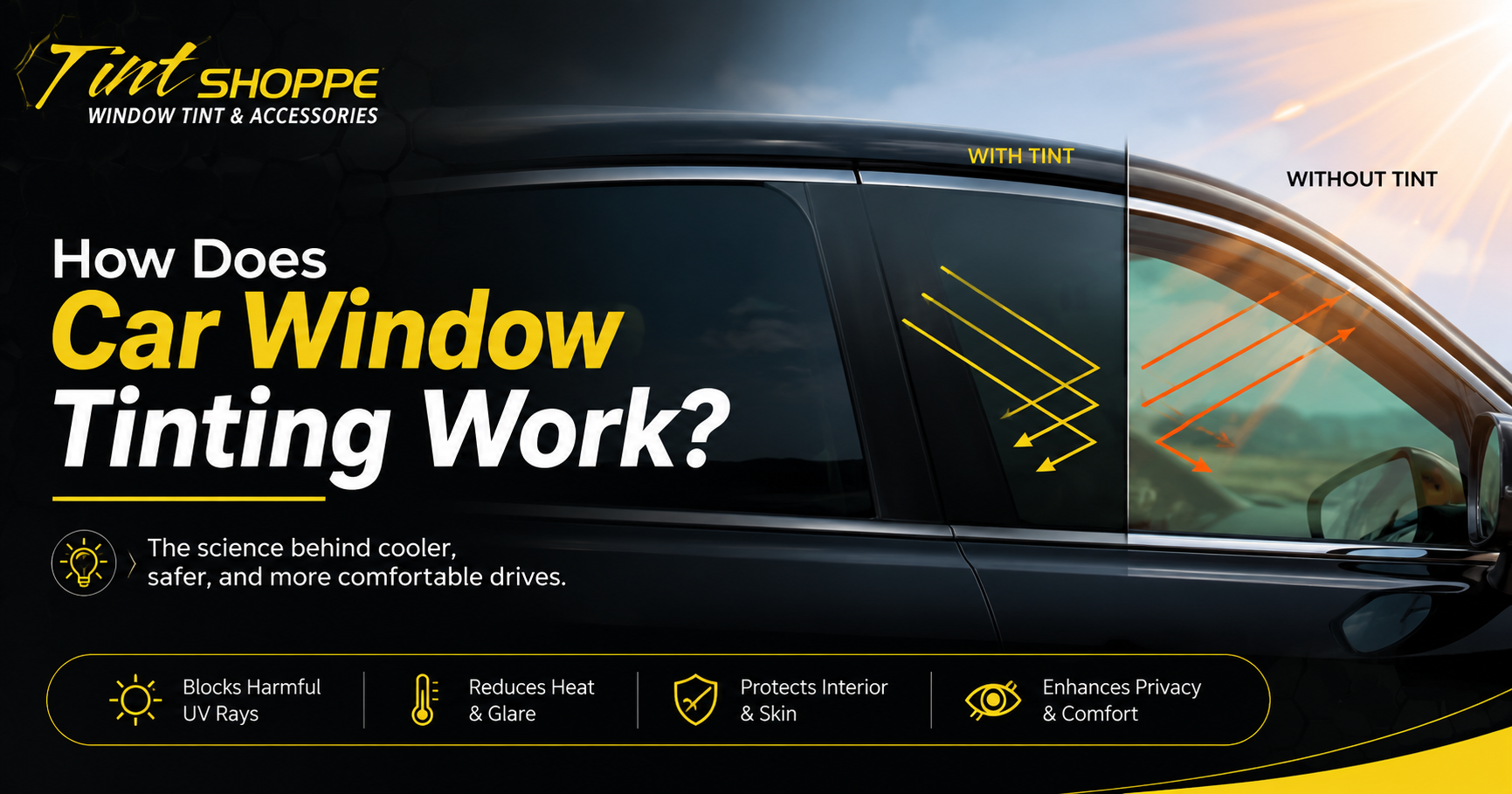
Anyone who has climbed into a vehicle after it sat in a parking lot all afternoon knows how uncomfortable it can be. The seats are hot, the steering wheel feels almost untouchable, and the air conditioning has to work hard just to cool things down.
The darker, cleaner look is definitely part of the appeal, but that’s not why many drivers decide to tint their windows. For many people, the biggest benefits are a cooler cabin, greater comfort on sunny days, and added protection for the vehicle’s interior.
So, how does window tinting work? The answer comes down to how window films manage different types of solar energy before they pass through your vehicle’s glass.
In this guide, we look at how sunlight affects your vehicle, the difference between UV and infrared radiation, how modern tint films reduce heat, and why ceramic technology has become a popular choice for today’s drivers.
Understanding Solar Energy and Vehicle Heat Buildup
What Happens When Sunlight Hits Your Vehicle?
Most people think sunlight is simply light and heat, but there is much more happening when those rays hit your vehicle.
As sunlight passes through the glass, interior surfaces such as seats, dashboards, carpets, and door panels absorb that energy. Over time, those surfaces begin releasing heat into the cabin, leading temperatures to rise and making the vehicle feel much warmer inside.
Why Cars Get So Hot in the Sun
Most drivers have opened a parked car and experienced a rush of hot air. This happens because solar energy enters through the glass and becomes trapped inside the cabin.
As heat builds, interior temperatures can climb far beyond outside temperatures, creating an uncomfortable environment for both drivers and passengers.
The Role of Automotive Glass
Many drivers assume their vehicle’s windows provide complete protection from the sun, but that’s not entirely the case. While modern windshields can block some harmful UV rays, side and rear windows often allow significant amounts of heat and solar radiation to pass through.
That’s why a vehicle can still feel extremely hot inside, even when all the windows are closed. This is also one of the main reasons many drivers choose to invest in professional window tint. The right film adds an extra layer of protection while helping keep the cabin more comfortable.
What Is Window Tint and How Is It Made?
Most drivers don’t think much about what’s actually inside a window tint film. It looks simple from the outside, but modern films are built using several layers that work together to manage heat, glare, and UV exposure.
- Dyed materials for glare reduction
- Carbon particles for heat control
- Metalized layers for solar reflection
- Ceramic particles for advanced performance
Each layer serves a purpose, helping improve comfort, reduce glare, and manage solar energy.
Today’s window tinting technology delivers far greater performance than older films while maintaining excellent visibility.
The Science of UV Rejection
What Are UV Rays?
Most drivers know UV rays can cause sunburn, but they can also affect a vehicle over time. Constant exposure to sunlight can slowly wear down interior materials, especially in vehicles that spend a lot of time outdoors.
How UV Rays Damage Vehicle Interiors
Over time, UV exposure can lead to:
- Faded upholstery
- Cracked dashboards
- Dry leather surfaces
- Discolored trim pieces
These changes often occur gradually but can greatly affect a vehicle’s appearance.
How Window Tint Blocks UV Radiation
Think about how sunlight can fade outdoor furniture after years of exposure. A similar thing can happen inside your vehicle. Seats, dashboards, and trim panels are exposed to sunlight every time you drive or park outdoors.
That’s where a UV rejection window tint can make a difference. By blocking most harmful UV rays, it helps slow down fading and keeps interior materials looking better for longer.
Health Benefits of UV Rejection
A UV rejection window tint doesn’t just protect your vehicle. It also helps reduce daily UV exposure for drivers and passengers, especially during long commutes and road trips.
The Science of Infrared Rejection
What Is Infrared Radiation?
If you’ve ever wondered why a vehicle feels so much hotter inside than outside, infrared energy is a big part of the reason. It’s the portion of sunlight responsible for much of the heat that builds up inside the cabin.
Difference Between UV and IR Rays
While both come from sunlight, they serve different roles:
- UV rays contribute to fading and skin damage
- IR rays generate heat
Effective window films are created to address both.
How Window Tint Rejects Infrared Heat
Modern films use custom materials that absorb or reflect infrared energy before it enters the cabin. As a result, less heat passes through the glass, helping keep the interior cooler.
For those wondering, “How does window tinting work?”, this cooling effect is the benefit they notice first.
Why IR Rejection Matters More Than Darkness
A common misconception is that a darker tint automatically blocks more heat.
In reality, heat rejection depends more on film technology than darkness. A lighter ceramic film may outperform a darker-dyed film in reducing heat.
Understanding this difference helps explain how does window tinting work beyond appearance alone.
How Ceramic Window Tint Uses Advanced Technology
Ceramic tint uses microscopic ceramic particles rather than dyes or metalized layers. These particles help block UV and infrared radiation without interfering with electronic devices.
Because ceramic films contain no metal, they typically do not affect:
- GPS systems
- Mobile phones
- Bluetooth devices
- Satellite radio
Understanding Window Tint Performance Ratings
Shopping for window tint can feel a little confusing at first because there are so many numbers and ratings to compare. Some films may look similar on the surface, but perform very differently once they’re installed.
You’ll often see terms such as:
- Visible Light Transmission (VLT)
- UV Rejection
- Infrared Rejection
These ratings help explain how much light, heat, and UV radiation a film can block. Looking beyond the darkness of the tint often gives a much better idea of how it will perform in everyday driving conditions.
A high-quality UV rejection window tint should provide strong protection while maintaining good visibility and long-term durability.
Real-World Benefits of UV and IR Rejection
Many drivers notice the benefits of window tinting for cars within the first few days after installation. The cabin feels more comfortable, glare becomes less distracting, and the vehicle doesn’t heat up as quickly when parked outside.
Drivers frequently experience:
- Cooler cabin temperatures
- Reduced glare
- Improved comfort
- Better interior protection
- Less strain on the AC system
- Increased privacy
Bottom Line
Understanding how does window tinting work helps explain why window tint remains one of the most practical upgrades for modern vehicles. By reducing heat and blocking harmful UV rays, quality tint helps improve comfort while protecting your vehicle’s interior.
If you’re searching for top window tinting services, working with experienced professionals can help ensure you choose the right film for your needs.
Looking to upgrade with premium window tint in Woodbridge?
Contact the Tint Shoppe today for professional, customized window tinting services tailored to your car’s needs. Call (703) 491-8300 to get a quote and experience how tinted windows can make your drive more comfortable.
FAQs
How does window tint reduce heat inside a car?
It blocks a portion of infrared energy before it enters the cabin, helping keep interior temperatures lower.
What is the difference between UV rejection and IR rejection?
UV rejection protects against harmful ultraviolet rays, while IR rejection helps reduce heat buildup.
Does darker window tint block more heat?
Not always. Heat rejection depends on the film itself, not simply how dark it appears.
How much UV radiation can window tint block?
Many premium films can block up to 99% of harmful UV rays.
What type of window tint provides the best heat rejection?
Ceramic window tint is widely regarded as one of the best options for heat rejection.
Does ceramic window tint provide the best heat rejection?
In most cases, yes. Ceramic films typically outperform dyed films in heat reduction.
Can window tint protect my car’s interior from fading?
Yes. Window tint helps reduce UV exposure, which can gradually damage interior materials.
Does window tint interfere with GPS, mobile phones, or radio signals?
Most ceramic films do not interfere with electronic signals because they contain no metal.