 (703) 491-8300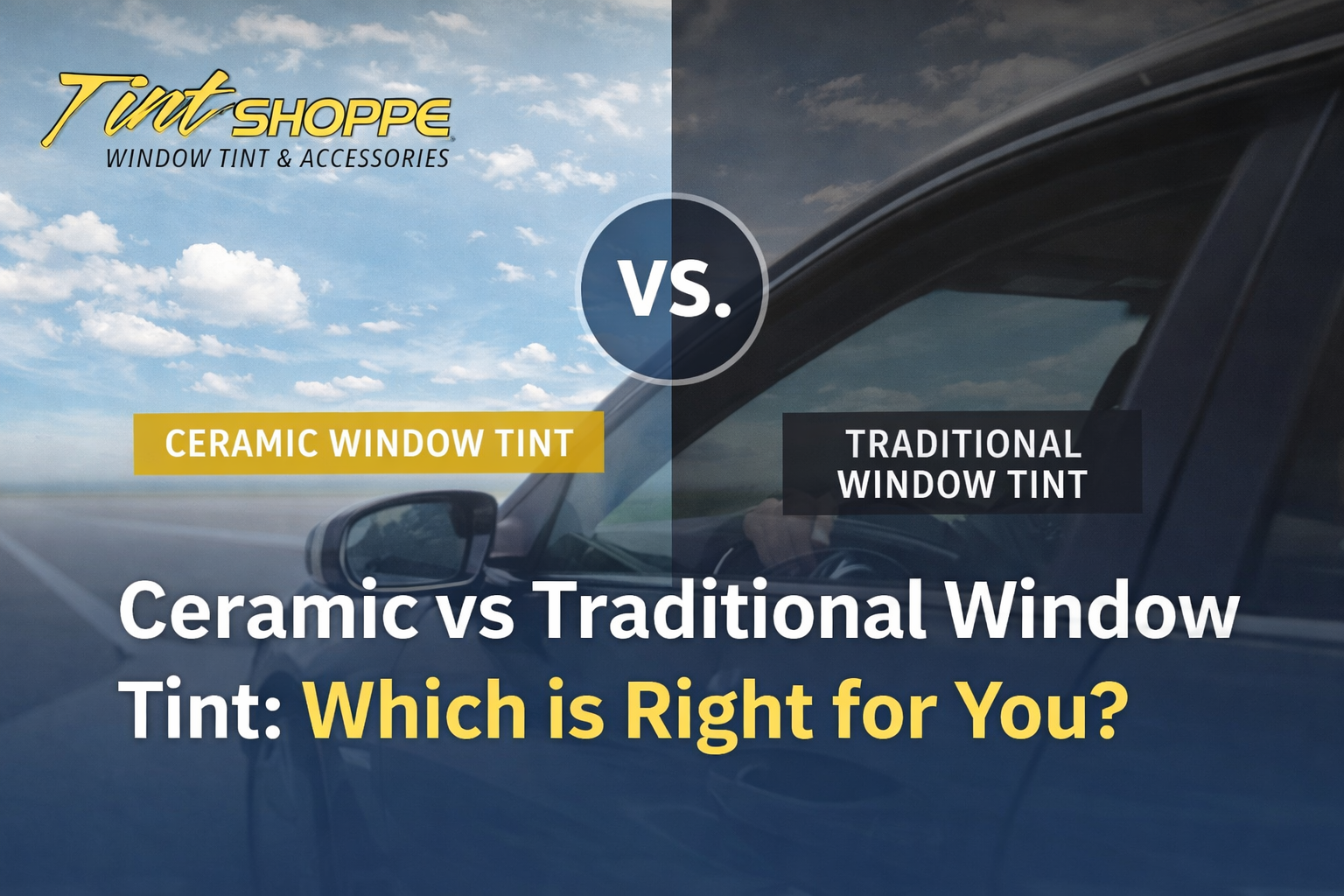
Anyone who has spent a sunny afternoon driving knows the feeling: the sun streaming through the windows, the steering wheel warming up to a stinging temperature, and the sun glinting off the windshield. It’s then and there when the conversation turns to window tint.
But as quickly as the conversation turns to window tint, the next question is sure to follow: ceramic or traditional? Both words are bandied about in tint shops, online forums, and at car meetups, but it’s not always easy to tell the difference.
This article walks through the real differences in ceramic vs traditional window tint, how each type works, and how to decide which one actually fits your driving habits and expectations.
Understanding the Two Types of Window Tint
Most drivers discover window tint through recommendations. A friend gets it done, someone mentions cooler interiors, or a shop explains the options while pointing at film samples. Before long, you realize there are several types of window tint, though two main categories usually come up in conversation: ceramic and traditional.
Traditional tint has been around for decades. It generally relies on dyed or metallic layers that darken the glass and block some sunlight. It works, and people have used it for years.
Ceramic tint arrived later, using tiny non-metal ceramic particles embedded within the film. The material changes how the tint interacts with heat and ultraviolet radiation. The film still looks like normal tint from outside the vehicle, though its internal structure performs quite differently.
At first glance, it may seem like a minor difference, but after driving with each type of tint, most people begin to notice the difference.
How Window Tint Works
Window tint does more than make glass darker. The film interacts with sunlight in several ways.
Light and Heat Control
Sunlight carries visible light along with infrared heat. A good tint filters part of that energy before it reaches the cabin. Without the film, the glass acts almost like a greenhouse panel, allowing heat to accumulate inside the vehicle.
Tint slows that process. The cabin warms more slowly, and the air conditioning doesn’t have to struggle as much.
Glare Reduction
Bright sunlight bouncing off roads, water, or nearby cars can strain your eyes. Tint softens that glare, creating a more comfortable driving environment.
Many drivers notice this during long highway trips. The difference can feel subtle at first. After a few hours behind the wheel, it becomes obvious.
Protection and Privacy
Ultraviolet rays contribute to the fading of upholstery and the cracking of dashboards over time. Window tint blocks a large portion of that exposure.
Privacy also plays a role. Darker windows make it harder for people outside the vehicle to see personal items inside.
Those functions apply to both major types of window tint. The materials used inside the film change how effectively each one performs.
Ceramic Window Tint: Advanced Performance
Ceramic tint has gained attention over the last several years, and for good reason.
Instead of dyes or metals, the film uses microscopic ceramic particles. They are invisible to the eye but very effective at filtering infrared heat and ultraviolet radiation. The glass may look only slightly darker, yet the cabin temperature often feels noticeably lower.
Many drivers who research ceramic vs. traditional window tint end up leaning toward ceramic after sitting in a car equipped with it. The heat difference on sunny days tends to stand out immediately.
One interesting detail is signal compatibility. Metallic films sometimes interfere with radio signals, phone reception, or GPS connections. Ceramic material avoids that issue, which keeps devices working normally.
Drivers often mention the benefits of ceramic tint when discussing long road trips or vehicles that spend hours parked in direct sunlight.
Traditional Window Tint: Basic but Effective
Traditional tint still holds a place in the market. Not every driver needs advanced heat rejection, and some simply want darker windows for appearance or privacy.
Dyed film absorbs sunlight, reducing the amount of light entering the vehicle. Metallic versions reflect some heat outward, which can help slightly with temperature control.
Many drivers choose traditional tint because of its lower price point. For a commuter vehicle or older car, the simpler option sometimes feels perfectly reasonable. That said, traditional tint may fade over time. Dyed layers can gradually lose their color after years of exposure to sunlight. Metallic films usually last longer but may interfere with electronic signals in certain situations.
So while the performance gap exists, traditional tint still accomplishes the core goal: reducing glare and adding privacy.
Head-to-Head Comparison: Ceramic vs Traditional Tint
Looking directly at ceramic vs traditional window tint, the differences come down to material and performance.
Ceramic films focus heavily on heat rejection without needing darker shades. Traditional films lean more on shading and light reduction.
Price also separates the two. Ceramic options usually cost more up front, though many drivers view them as a long-term upgrade rather than a short-term purchase.
Appearance rarely gives away the difference. Both films can look similar from the outside.
Performance tells the real story.
Benefit Breakdown: Why Ceramic Tint Stands Out
Heat Rejection
Ceramic film filters a larger portion of infrared heat. Step into a vehicle parked under direct sunlight, and the effect becomes obvious fairly quickly.
Drivers searching for the best window tint often place heat control at the top of their list.
UV Protection
Ceramic tint blocks nearly all ultraviolet radiation, which protects both passengers and interior materials.
Glare Reduction
Both ceramic and traditional films soften glare, though ceramic versions often maintain better visibility from inside.
Longevity
When it comes to longevity, ceramic film resists fading and discoloration, so even after a few years, it still maintains its color across all the windows.
Aesthetics
Some drivers prefer the clean, slightly reflective look that ceramic film provides. The glass keeps a crisp appearance rather than the flat dark tone seen in certain dyed films.
Signal-Friendly
Phones, GPS systems, satellite radio, and keyless entry devices function normally with ceramic film.
For drivers who rely heavily on navigation or streaming audio, this detail can influence the decision toward the best window tint option.
When Traditional Tint Might Be Right for You
Ceramic tint performs extremely well, yet traditional film still works for many situations.
A driver on a tighter budget may choose traditional tint simply to gain privacy and reduce glare. If the car spends most of its time in shaded parking or short city drives, the advanced heat rejection may not feel necessary.
Traditional film also remains a common choice for older vehicles where owners prefer a simpler installation.
The choice between ceramic vs traditional window tint sometimes comes down to daily driving habits rather than technology alone.
Why Professional Installation Matters
Window tint installation looks simple until you attempt it yourself. Air bubbles, uneven edges, or misaligned film can quickly appear.
Drivers exploring ceramic tint in Stafford, VA often arrive with questions about shade levels, heat rejection, and long-term durability. Professional installers handle these details carefully.
Precision and Quality
Experienced technicians cut film to match each window shape. The result sits flush against the glass.
Proper Film Alignment
Edges must align perfectly with window seals. Even a small gap can lead to peeling over time.
Warranty Compliance
Many tint manufacturers require professional installation to honor product warranties.
The Tint Shoppe Advantage
Shops with experienced installers also help drivers compare films in person. Examining film samples under natural lighting can also help you make this decision much faster than reading about it online.
How The Tint Shoppe Helps You Choose the Right Tint
At Tint Shoppe, we help customers navigate their options in plain language. You can also examine film samples and discuss any performance variations to ensure it fits your driving style.
For drivers leaning toward ceramic upgrades, the shop offers ceramic window tinting services in Stafford, VA, designed for both comfort and appearance.
The goal is simple: help you choose a tint that actually fits your vehicle and your use of it.
Conclusion
Choosing between ceramic vs traditional window tint usually comes down to priorities. Traditional tint offers a familiar and budget-friendly solution for privacy and glare reduction. Ceramic film pushes performance further, especially when heat rejection and long-term durability matter.
Drivers who spend hours in traffic or park under strong sunlight often appreciate the extra comfort ceramic film provides. Others feel perfectly satisfied with traditional tint.
Either way, the right installation and quality materials make all the difference.
Thinking about upgrading your car windows?
At Tint Shoppe, we help drivers choose the right tint for comfort, privacy, and appearance. Whether you want advanced ceramic protection or a traditional tint option, our experienced installers will guide you through the process and deliver clean, precise results.
Call us at (703) 491-8300 to schedule your consultation and see the difference quality window tint can make.
FAQs (Frequently Asked Questions)
What’s the main difference between ceramic and traditional tint?
Ceramic tint uses non-metal ceramic particles to block heat and UV rays. Traditional tint relies on dyed or metallic layers.
Does ceramic tint really keep cars cooler?
Yes. Ceramic film blocks more infrared light, helping lower cabin temperature on sunny days.
Will ceramic tint affect my phone or GPS signals?
No. Ceramic film does not interfere with electronic signals.
Is ceramic tint darker than traditional tint?
Not necessarily. Ceramic tint can block heat even with lighter shades.
How long does each type last?
Traditional dyed tint may fade after several years. Ceramic tint usually maintains its appearance much longer.
Does The Tint Shoppe offer warranties?
Yes. Warranty coverage depends on the film selected and the installation.